Why shifting our movement patterns may have a big impact on healing.
Before cancer, I thought of movement as something intentional. HIIT, running, yoga, strength training. It was something I did for my health, and to be perfectly honest, my something I could schedule or complete.
What I have realized since going through treatment is that movement is happening all the time, long before we ever step onto a mat or go for a walk. We are constantly moving through the world in patterns we rarely notice. You reach for your bag with the same hand every time without thinking about it; you carry things on one side, and shift into one hip when you stand. These small repetitions become the language of the body over time.
Cancer interrupted that autopilot for me. After surgery and treatment, the way I moved changed. Suddenly I could feel things I had never paid attention to before. Tightness in my ribs on my right side. Tension in my shoulders. Discomfort in the outside of my hip. Patterns of compensation I had not realized were there. Even simple things felt different, and that difference made everything more visible.
What I began to understand is that we do not just move when we exercise. We are living in movement all day long, and the body is constantly adapting to these repeated patterns. Sometimes they create ease. Sometimes they quietly create tension and restriction without us ever noticing.
What I have also come to appreciate is that changing the way we move does not just affect our muscles and joints. It also shapes our nervous system.
Our automatic movement patterns exist for a reason. The brain is designed to conserve energy, so it turns repeated actions into habits. That is why we can brush our teeth, drive a car, or walk through the grocery store without consciously thinking about every movement. Autopilot is not a flaw. It is one of the brain’s greatest efficiencies.
The work is not feeling like you have to start from scratch and do everything differently. The work is beginning to tune in to which movement patterns are serving you and which ones are not. Every time you interrupt an automatic pattern and choose something different, you invite the brain to pay attention. Instead of relying on the same neural pathway, you begin creating a new one. This is how we support neuroplasticity, the brain’s ability to form new neural pathways through repeated experiences.
That is why healing does not have to mean throwing the baby out with the bathwater or completely reinventing your life.
It can be as simple as standing with your weight evenly between both feet instead of always leaning into one hip. Reaching for your bag with your non dominant hand. Taking one full breath before getting out of the car. Rotating toward the side that feels less familiar. Relaxing your shoulders while waiting in line. Entering a familiar yoga pose more slowly and noticing how your body organizes itself instead of forcing it into a shape.
These are not dramatic changes.
They are small interruptions to unconscious habits.
Over time, those small interruptions become new patterns. Those new patterns become new conversations between the brain and the body. We begin to replace unconscious repitition with intentional movement. We move with more coherence, more fluidity, and more ease, not because we forced change, but because we created patterns that better support the body we are living in today.
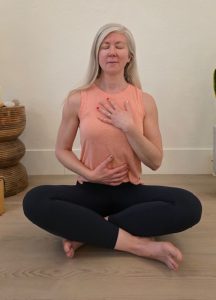
I do not think I move through the world differently because I am trying to. I think I move differently because I notice more. There is more awareness in how I sit, how I walk, how I breathe, and how I hold myself. Movement has become less about effort and more about listening.
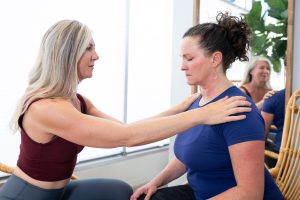
Listening more to my body has changed the conversation.I have started to unwind patterns that don’t serve me. Which is allowing space for new ones that support healing. I have shifted from simply reacting and compensating to creating more awareness, connection, and trust within myself.
Healing is not always found in the biggest changes. Sometimes it happens in the quiet moments when we begin paying attention. When we reconnect with our bodies. When we allow ourselves to move with more awareness, more compassion, and more trust.
I have come to see that healing is not about returning to who we were before. Healing is about learning how to move forward in a new way, with a deeper connection to the body that has carried us through it all.