After a breast cancer diagnosis how do you know if you are healed?
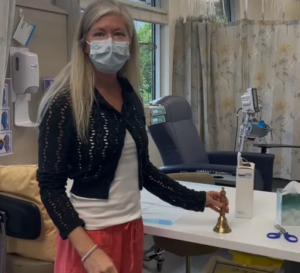
Since September 2024 I have been in treatment for triple-positive breast cancer. A mastectomy on my right side to start things off, 6 rounds of TCHP chemo from October through January, radiation in March, and a total of 18 infusions of Herceptin and Perjeta with 5 more to go. It has been a long haul and my body has felt the assault. The reasoning behind this aggressive treatment is that the studies show this regimen gives me the best chance to be cancer free by the end of all of this. After my mastectomy, I was officially diagnosed as Stage 1 and was actually told by my radiation oncologist that my margins were clear and the odds were very good that they got all the cancer; but nonetheless, the protocol was chemo and radiation, so let’s stay the course. Now that I have been through the surgery, the chemo, the radiation, and most of my targeted therapy, I should feel pretty positive that I am cancer free, right? I do not. I still feel like I am in the middle of it all, treading water and just barely able to keep my head above the surface. Some days the sea is calm and I am able to easily keep the water away from my face and breathe deeply. But other days the water is choppy and I have to tread quicker just to stay afloat.
The thing about cancer treatment is that no two treatment plans are the same. I have a friend who was diagnosed with triple-positive breast cancer a month after me. She is on the same treatment plan, except she received her chemotherapy as neoadjuvant treatment, before surgery. Her tumor was bigger than mine so they wanted to shrink it before taking it out. One thing about this approach is that when the breast tissue is analyzed post-surgery, they can determine if there was a complete pathological response – meaning no detectable cancer cells remain. This information ultimately led to her not needing radiation, but more importantly, an understanding and embodiment that she is cancer free.
Throughout cancer treatment, one of the most important lessons I’ve learned is not to compare myself to anyone else. Every cancer diagnosis is unique. Every body is different. Every treatment plan, and how each body responds to it, is different. I’ve worked hard to embrace that truth as I move through this journey.
And yet, there is a part of me that feels some jealousy toward those who received chemotherapy before surgery and received a pathology report showing no detectable cancer in their breast or lymph nodes. That kind of clarity feels powerful. I am aware that not everyone gets that kind of good news. In fact, most pathology reports do not show a complete response. But still, these reports offer information and that information would help me feel more secure that the choices I am making when it comes to cancer treatment are either working or not working. A data point along the way would help me feel more in control. And control is something that is missing when you are navigating a cancer diagnosis; a space filled with uncertainty and unpredictability. And for me, when I feel like I have no control, anxiety shows up.
Anxiety is something I’ve lived with for as long as I can remember. As a child, it often showed up as shyness and insecurity, especially in new or unfamiliar situations. As I got older, it took on a different shape, often appearing whenever there was uncertainty or something unknown ahead.
It was not until I was in my twenties that I learned to call it anxiety – a name for that sense of overwhelm, racing thoughts, and inner unease. As soon as I had a name for it, I began to gather tools to help me manage it so it did not become debilitating.
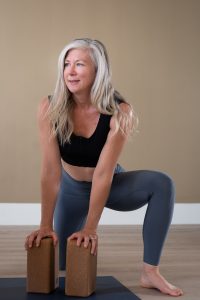
The most powerful tool in my toolbox has been my yoga practice. When I step onto my mat, it is an intentional pause, a space where I can quiet my mind and go inward. As soon as I arrive in that place – where there are no distractions, where I can tune into my inner knowing – I can uncover the root of what I’m feeling. Yoga does not erase my anxiety, but it gives me space to respond rather than react, to breathe rather than spiral, and to remember that I have everything I need within me to move through it.
What I have come to realize is that healing is not always marked by a finish line. It is not linear, and it is certainly not black and white. A pathology report might say “no cancer detected,” but that does not necessarily mean you are healed. Healing is so much more than physical clearance; it’s about tuning into your inner knowing and asking, Do I feel healed? Do I feel grounded and confident? Do I feel whole?
I do not have a piece of paper that reads “complete pathological response”, but I do know that I have poured everything I have into this process, both through the power of western medicine and the nourishment of complementary therapies. I have been an active participant in my healing – emotionally, physically, spiritually, energetically, and mentally. Some days I am full of gratitude and strength; other days I feel like I am barely keeping my head above water. But what grounds me is the trust I have built in myself. In my ability to keep showing up, to breathe through the unknown, and to pause in order to tune in to my deep intuitive self. Cancer has challenged every layer of who I am, but it has also revealed an inner steadiness. And for now, that is enough.